Every bubble tea shop eventually gets the same question from a customer holding an empty cup: does this go in the recycling or the trash? The honest answer is more complicated than most owners expect, and it matters more every year as cities tighten single-use packaging rules. If you are ordering custom printed boba cups, the material you choose decides not only how your drink looks but whether the cup can be recycled, composted, or lawfully sold in your area at all. This guide walks through what the common cup materials actually are, what the recycling and compostability claims mean, and how to specify a cup that keeps you compliant.
What your boba cup is actually made of
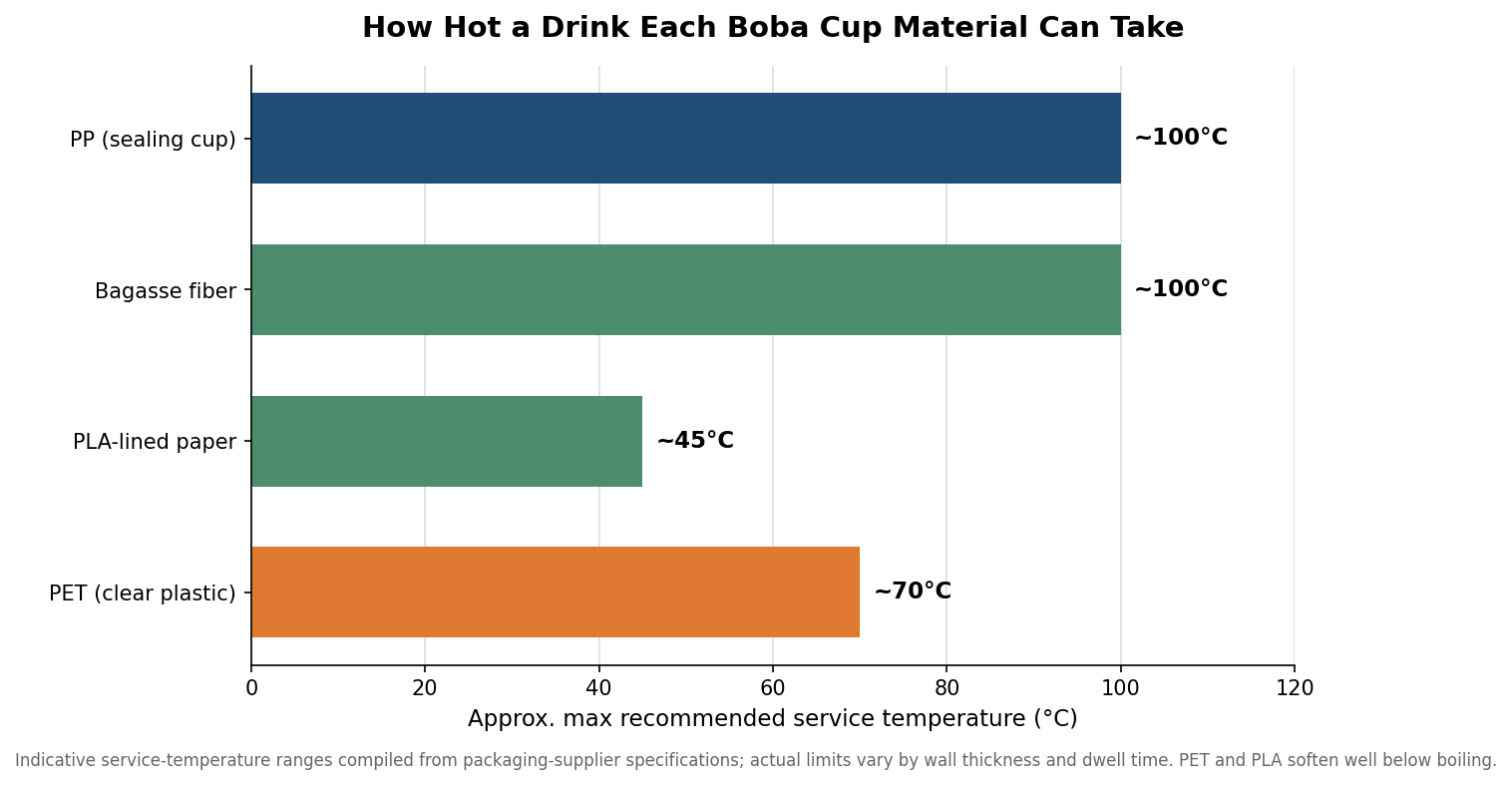
The vast majority of sealed boba cups are polypropylene, resin identification code #5. PP is the workhorse of the category because it tolerates the heat of a film-sealing machine, holds its shape when filled with ice and heavy toppings, and costs less than clearer plastics. Its trade-off is looks: PP is semi-translucent rather than glass-clear. The main alternative, PET (code #1), is crystal clear and photographs beautifully for layered fruit teas, but it is a cold-only material. PET begins to soften well below boiling, so it is a poor fit for hot drinks and is generally harder to run through a flat-film sealer.
Beyond the two plastics sit the fiber and bioplastic options. Paper cups lined with polyethylene handle hot liquid but are not compostable because of that plastic lining. Paper lined with PLA, a plant-based bioplastic made from corn or sugarcane starch, can be certified compostable, though PLA deforms at low temperatures and is best kept to cold service. Molded bagasse, the fiber left after sugarcane is pressed, handles both hot and cold and breaks down in commercial composting. The chart below shows the practical heat ceiling for each, which is the single biggest reason shops end up back with PP for anything served warm.
Recyclable in theory, rarely in practice
Here is the distinction that trips up most buyers. A cup being made of a recyclable resin is not the same as that cup being accepted by your local recycler. PP and PET are both technically recyclable, and PET in particular has a mature recycling stream in bottle form. But small food-service cups are a different story. Curbside programs in much of North America reject single-use cups because they arrive contaminated with sugar, milk, and tapioca residue, because thin-wall cups jam sorting equipment, and because film lids and mixed materials make clean separation uneconomic. A cup can carry a #5 stamp and still, realistically, end up in a landfill in your city.
That gap between the resin code and the real-world outcome is why “recyclable” is a claim to make carefully on printed cups. Overstating it invites both customer frustration and, in some jurisdictions, regulatory attention on misleading environmental marketing. If you want a genuine end-of-life story to print on the cup, compostable materials with third-party certification are usually the cleaner path, provided your customers actually have access to composting.
What compostability certifications really mean
Nearly all certified compostable cups are industrially compostable, not home compostable. That means they break down only in a commercial facility that reaches and holds elevated temperatures, not in a backyard pile. The certifications to look for are real and worth checking on any supplier’s spec sheet: BPI certification from the Biodegradable Products Institute, and the underlying ASTM standards, D6400 for compostable plastics like PLA and D6868 for compostable coatings on paper. A cup marketed as “eco-friendly” or “biodegradable” without one of these certifications is making an unverifiable claim, and “biodegradable” on its own has no fixed legal definition in the United States.
The catch is infrastructure. A certified compostable cup only composts if it reaches a facility that accepts that packaging, and many regions have limited or no access. Some commercial composters actively reject PLA and lined-fiber foodware because it complicates their process. Before you commit to compostable cups as a selling point, confirm that a facility near your shops takes them; otherwise the cup lands in the same trash stream as plastic, at a higher cost per unit.
The rules that increasingly decide for you
Packaging law is moving faster than most small operators realize, and it is increasingly the deciding factor rather than aesthetics. A growing number of U.S. states have banned intentionally added PFAS in food packaging, which historically appeared as grease resistance in some molded-fiber products, so responsible fiber suppliers now certify their cups PFAS-free. Separately, plastic straw restrictions in various cities directly affect boba because the wide-bore straw is part of the format; some shops have moved to paper or PLA wide straws or to strawless film with a spork. Foam bans and broader single-use plastic rules continue to expand at the city and state level.
Because these rules vary by location, the safe approach for a multi-location or shipping brand is to specify to the strictest market you serve. Ask any supplier three things in writing: the resin code or fiber type, whether the item is certified PFAS-free, and whether it carries a named compostability certification rather than a vague label. Those answers, kept on file, are what protect you if a claim on your printed cup is ever questioned.
Specifying a compliant custom cup
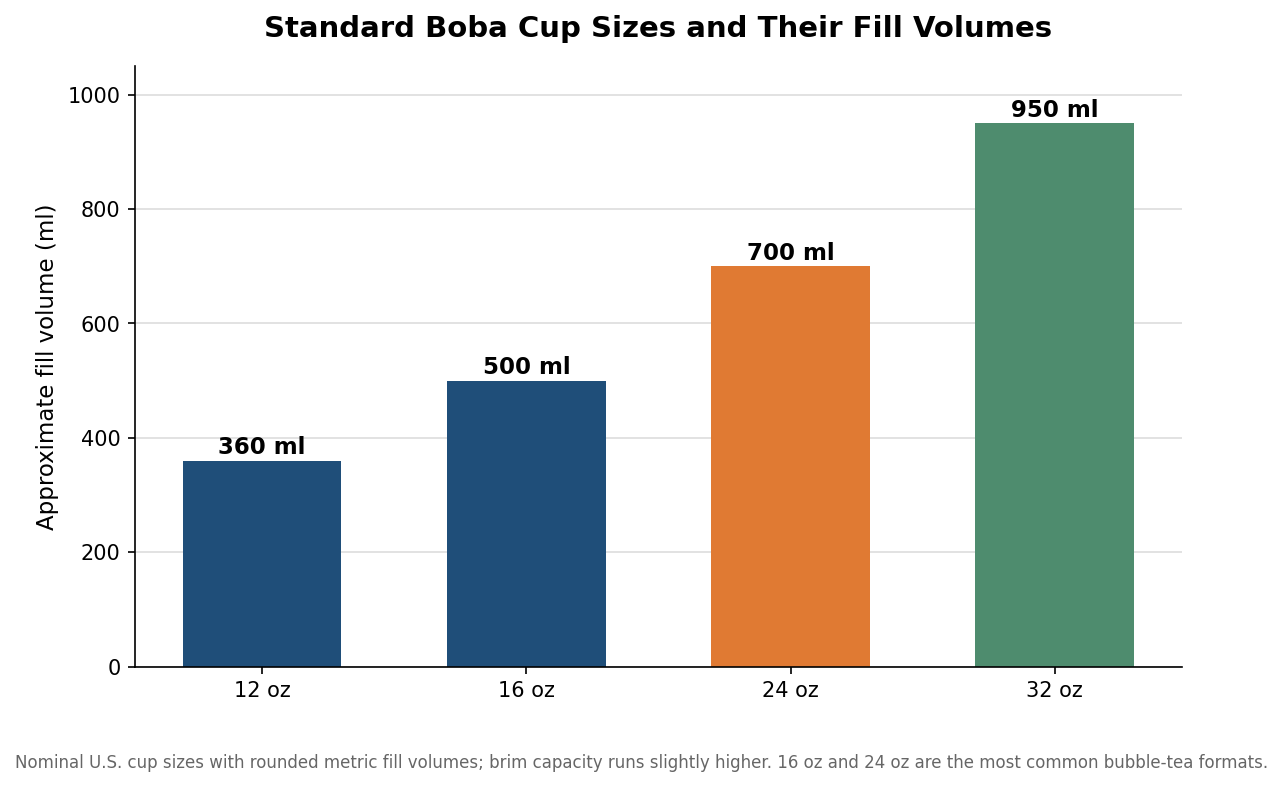
For most shops, the practical outcome looks like this. Hot and mixed service almost always stays on PP for its heat tolerance and sealer compatibility, with recycling claims kept modest and accurate. Cold-only, photo-driven menus can justify PET for clarity, again with honest labeling. Shops with genuine access to commercial composting, and a willingness to pay a premium of roughly one and a half to two times the plastic cost, can move to certified PLA-lined paper or bagasse and earn a real sustainability claim. Standard sizes are consistent across materials, so your artwork and sealing setup carry over; the chart below shows the common formats.
Whatever you choose, lock the material decision before you finalize artwork. Custom printing typically runs on minimum order quantities in the thousands and lead times of a few weeks for domestic stock printing to a couple of months for overseas production, so switching resin after approving a design is expensive. Decide the compliance story first, confirm the certifications in writing, then print. A cup that looks great and makes a claim you can stand behind is worth far more than one that photographs well and quietly overstates what happens after the last sip.