Specifying a boba cup looks simple until you are staring at a quote form asking for size, material, lid style, rim diameter, straw, and print colors, and every choice quietly changes the others. The cup is the most-handled piece of packaging in a bubble tea shop, and it is also the one that decides whether a drink survives a delivery bag. This is a practical walkthrough of the decisions, in the order it makes sense to make them, with the numbers you need to fill in that form confidently.
Start with the drink, then the size
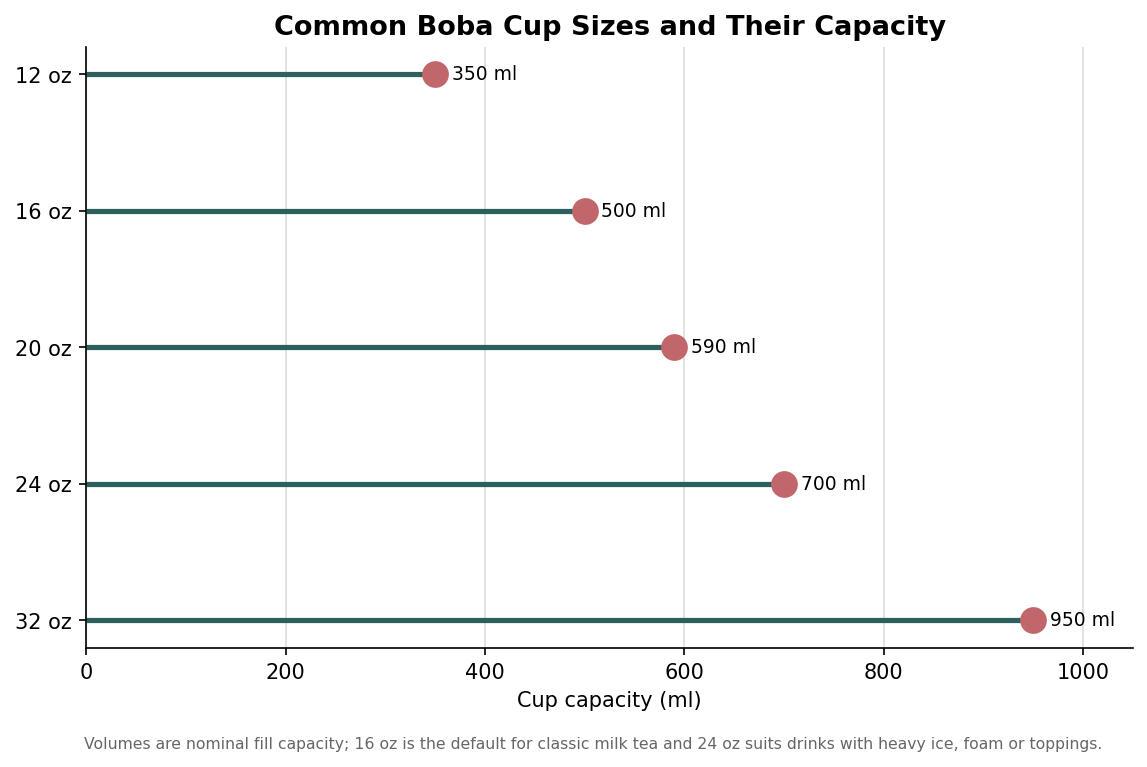
Size is the first real decision because it cascades into everything else. The common plastic boba cups run 12 oz (about 350 ml), 16 oz (500 ml), 20 oz (590 ml), 24 oz (700 ml), and 32 oz (950 ml). A 16 oz cup is the sensible default for a classic milk tea, while 24 oz is the workhorse for anything that needs room for a lot of ice, cheese foam, fruit, or a generous scoop of pearls. If your signature drinks are topping-heavy, spec up rather than down; a cramped cup overflows the moment a barista adds pearls and seals it.
Whatever size you choose, write down the rim diameter, because lids and sealing film are matched to the rim, not the volume. Most boba cups use a 90 mm or 95 mm rim, and mixing a 90 mm film with a 95 mm cup is a classic, expensive mistake. Standardizing your whole range on one rim size lets a single lid or one roll of film cover every drink you make.
PET or PP: clarity versus the cup sealer
The two plastics you will be offered are PET and PP, and they are not interchangeable. PET is prized for clarity: it is glass-clear, which is why it is the default for fruit teas and layered drinks that are meant to be seen. It has a premium, thicker feel but is really a cold-drink material and does not love heat.
PP is the material paired with cup-sealing machines and busy cold-drink counters. It is typically the more economical option, often with lower minimums, and it tolerates warmth better than PET, which matters if any of your drinks go into the cup hot. The practical rule: if you seal with film, you are almost certainly on PP; if your drinks are cold and you want the clearest possible cup for display, PET earns its place. Decide this before artwork, because ink behaves slightly differently on the two surfaces and your printer will want to know.
Lids and sealing film: the spill decision
There are three closures, and they answer different problems. A flat straw-slot lid is the standard for a cold drink handed across the counter. A dome lid buys vertical space for cheese foam, whipped cream, or a tower of toppings that would smear against a flat lid. And heat-seal film is the tight, poke-through membrane that makes a drink genuinely spill-resistant, which is why it dominates delivery and takeaway.
The catch with film is that it requires a sealing machine and film rolls matched to your rim size, so it is an equipment decision as much as a packaging one. If a meaningful share of your orders are delivery, film is worth the counter space; if you are almost entirely dine-in and grab-and-go, snap-on lids keep things simpler and let customers re-close a drink. Many shops carry both: film for delivery, domes for the loaded specialty drinks.
Straws and the small details that get forgotten
Pearls need a wide straw. A typical boba straw runs around 12 mm in diameter, roughly double a standard 6 to 8 mm straw, and often comes with an angled, pointed tip that can pierce sealing film and still pass tapioca without clogging. If you seal with film, your straw and your film have to be a matched pair, so confirm the straw can actually puncture the film you are buying. It is a five-cent item that ruins the experience when it is wrong.
The other easily forgotten detail is print wrap and safe area. A cup is a cone, so artwork distorts top to bottom and any design that runs to the seam needs bleed. Keep logos and legal text away from the rim and base curl, and ask your printer for a die line rather than guessing.
Ordering: minimums, colors, and lead time
Custom printing is an economy-of-scale product, and the quote reflects it. Minimum order quantities commonly land around 10 to 20 cases per size and material, which for many suppliers means several thousand cups per SKU, so resist the urge to launch with five different sizes at once. At real volume, per-cup pricing can fall to a few cents, often quoted under about four cents a cup, but that number only appears at scale.
Color drives cost too. Each print color typically carries a one-time plate or molding charge in the neighborhood of $100, and most clean cup designs live comfortably in one to three colors. A two-color logo that reads well from across a counter usually beats a full-color photograph that muddies on a curved, translucent surface.
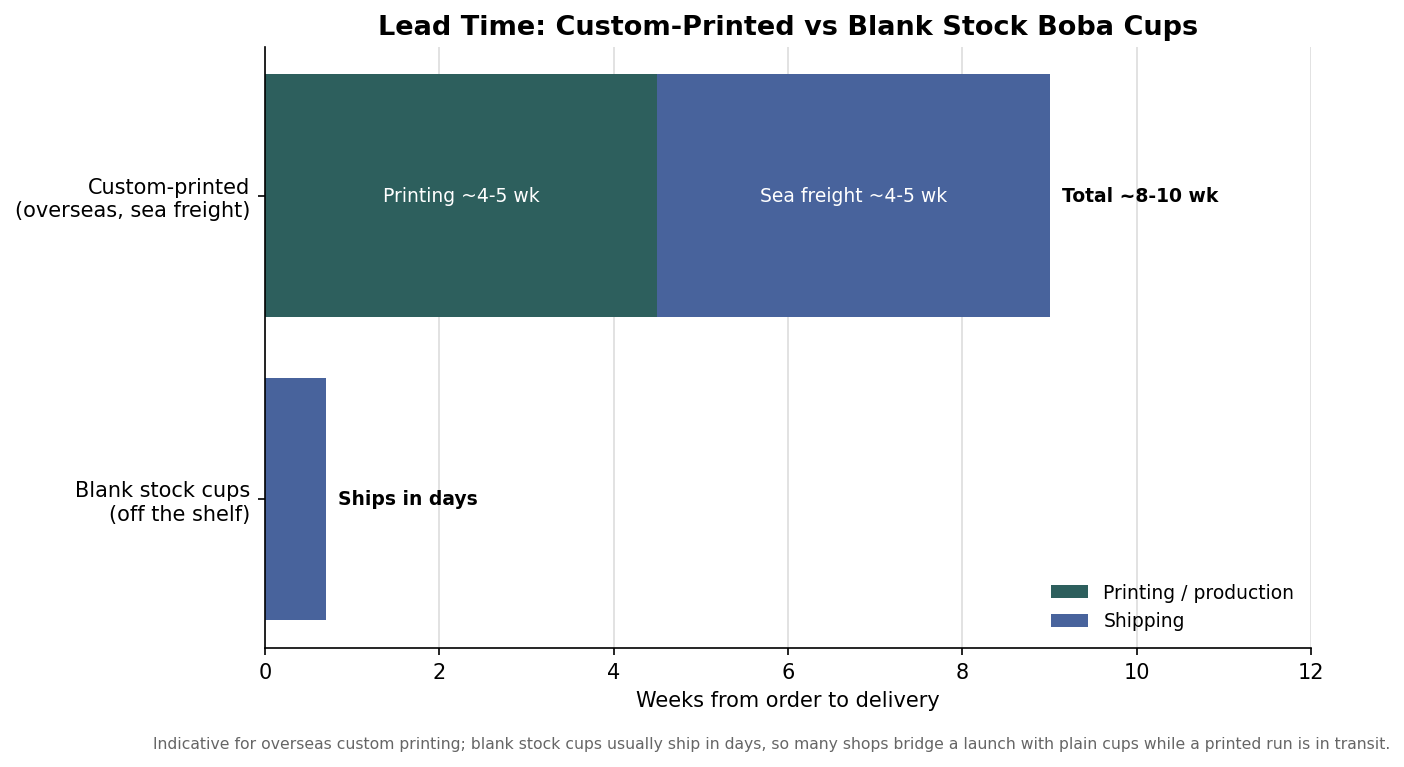
Finally, plan the calendar. For overseas custom printing, expect roughly four to five weeks of production plus another four to five weeks of sea freight, so eight to ten weeks door to door is a realistic figure rather than a pessimistic one. Because blank stock cups ship in days, a common move is to open or rebrand on plain cups, or on cups with a printed sleeve or label, while the custom printed run is in transit. Treat every figure here as indicative and confirm the specifics with your supplier, but spec in this order and the quote form stops being intimidating.